1. Chairman’s Statement
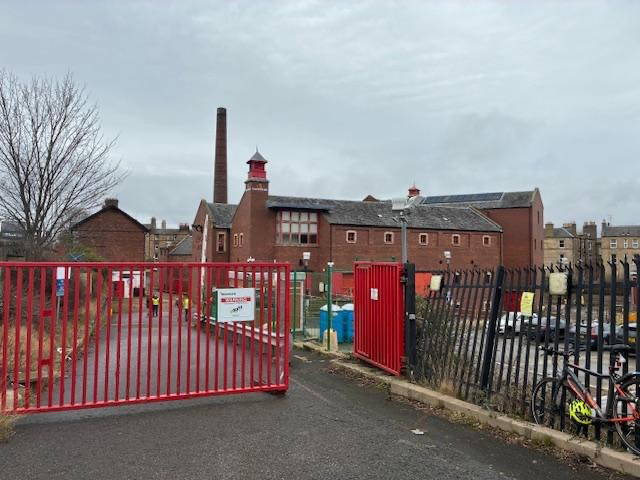
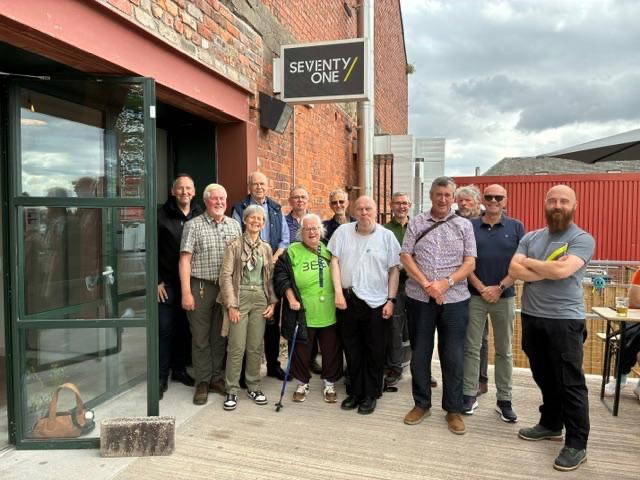
Our recent visit to Seventy One Brewing in Dundee was one of our best-ever brewery visits. You can read more about it later in this Newsletter. Thank you to all who attended and enjoyed the day.
The SBAA has also arranged a visit to Glasgow University and the archive on the 8th September. Please see Last Runnings for details.
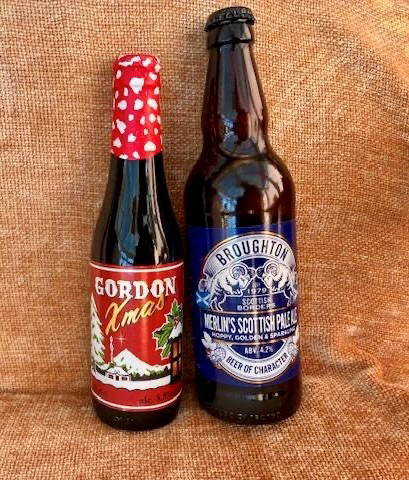
In our last Newsletter, I mentioned that both Brewdog and Innis & Gunn had gone into administration. Unfortunately, more bad news as Broughton Brewery has announced its closure, although its beer brands will continue to be brewed at the Spey Valley Brewery. Thank goodness, as the Jock family beers are among my favourites. Please read later about the Broughton Brewery closure.
I am indebted to Fergus, who prepared the ‘Squeezed Pint’ article in the Newsletter that outlines that many Scottish Breweries are under pressure since COVID. Also, CAMRA issued a report recently raising its concerns about the current beer market. As a result, we should support all Scottish breweries, in particular, our Corporate members, see the listing under Sponsors on the SBAA website.
I have now received copies of the book on “The history of brewing in Edinburgh”. The book was delayed by about 2 months due to transport and customs issues. The book was printed in Poland. There will be a book launch in the Autumn, we will keep members informed.
In previous newsletters, we have been running a series of articles on beers that have interesting stories to tell. This could be beers past or present. As members, I did ask you to submit articles on any beers that you are aware of regarding this. Unfortunately, we have not received any replies as yet, which is disappointing. After all, this is your newsletter, so please give this some thought. We look forward to hearing from you.
Thank you. John Martin
2. The Squeezed Pint: Brewery Decline in Scotland
The Scottish brewing sector is experiencing a severe structural crisis, marked by a rapid contraction in its active brewery population. Data from the Society of Independent Brewers and Associates (SIBA) indicates that Scotland suffered a 24 per cent reduction in operational breweries between 2023 and the beginning of 2026. The total number of active brewing sites dropped from 146 in 2023 down to 131 in 2025, before plummeting to 111 at the start of 2026.
This sharp contraction has caused Scotland’s share of the total UK brewing market to slip from 8 per cent to 7 per cent. This reality demonstrates that the pace of brewery failures in Scotland is significantly outstripping the rest of the UK.
Reasons for this decline are varied ranging from economic pressures, structural market issues and changing consumer habits.
Escalating Production and Operational Overheads
Independent Scottish breweries have been trapped in a punishing economic environment dictated by hyper-inflation across essential raw material supplies and energy. The costs of fundamental brewing ingredients—namely malted barley, hops, and yeast strains—have surged.
Energy costs over the last few years have also increased significantly largely due to the invasion of Ukraine by Russia and with an energy intensive business such as brewing requiring heating – mashing and boiling wort, cooling – refrigeration for fermentation control, downstream processing and storage the impact on finances has been substantial. Many breweries would have enjoyed a fixed rate utility supply contract but as those expire new contracts are at a significant premium eating into already thin operating margins.
Labour costs have also risen above inflation over the last few years with increases in the national minimum wage and notably the increase in employers’ national insurance contributions.
This cost pressure is aggravated by packaging shortages and price spikes for aluminium cans and glass bottles.
A combination of all of the above have led breweries to increase their prices but many have not been able to completely close the margin gap and because more than half of Scotland’s microbreweries historically operate on lean turnovers of under £100,000 annually, they lack the capital reserves needed to absorb these simultaneous cash-flow shocks.
Further headwinds on the horizon include the UK wide deposit return scheme due to be implemented in 2027 and Scottish Government placement regulations for foods with high fat, sugar and salt.
Restricted Market Access
A fundamental bottleneck destroying the financial viability of independent Scottish brewers is the lack of commercial routes to consumers. The Campaign for Real Ale (CAMRA) highlights that major multinational beverage conglomerates aggressively control draught lines across hospitality estates. Through restrictive supply agreements and multi-year tap ties, macro-brands systematically lock out smaller local operations.
According to SIBA market insight reviews, approximately 60 per cent of pubs operating within a 40-mile radius of a local independent brewery are completely barred from buying or serving that brewer’s products.
This commercial exclusion is mirrored in the off-trade retail market. Global supermarket chains demand deep bulk-discounting schedules and high listing fees that micro-craft labels cannot fulfil without losing money on every unit. Consequently, small-scale producers are cut out of mainstream grocery aisles and pub chains, forcing them to depend heavily on localized direct-to-consumer taprooms.
The Collapse of the Scottish Pub
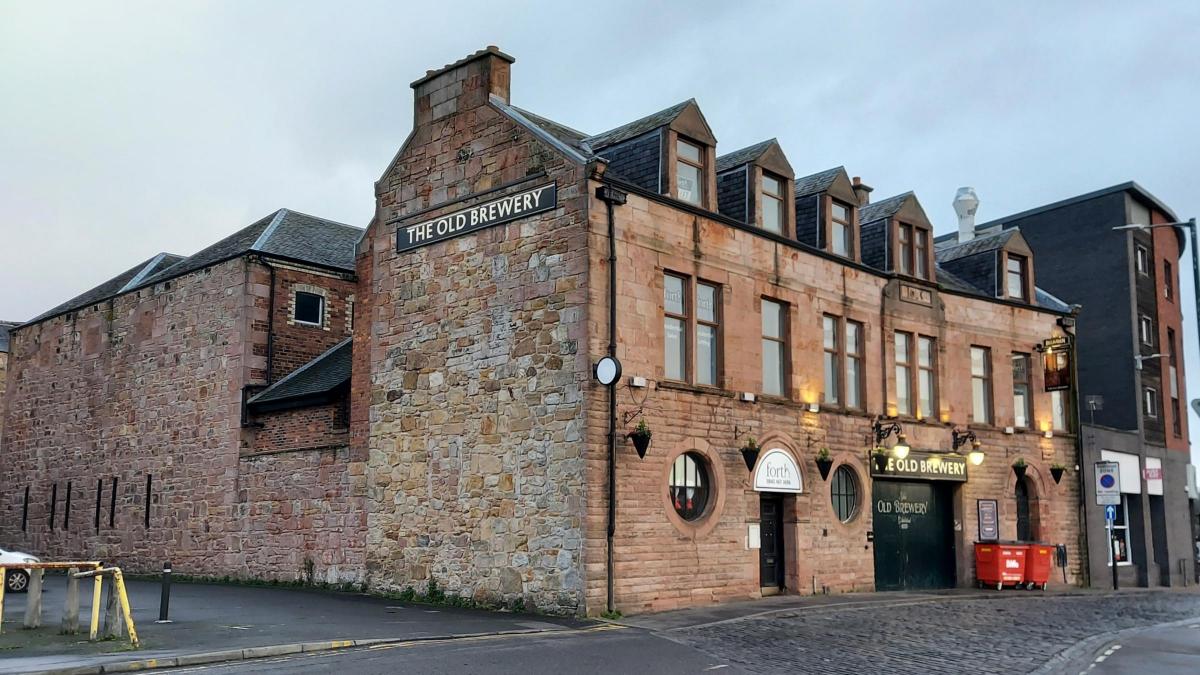
The Old Brewery Pub, on the site of the former MacLay’s Brewery in Alloa, closed in April.
The downscaling of independent beer production is intrinsically linked to widespread distress across the broader Scottish hospitality ecosystem. Pubs and licensed venues across Scotland are closing at a rate roughly 50 per cent higher than their counterparts in England. Over a rolling five-year window, Scotland sustained the permanent loss of 293 community pubs, wiping out 6.4 per cent of the nation’s total hospitality real estate.
Data published by the Scottish Licensed Trade Association (SLTA) reveals a grim commercial reality:
- Profitability Drops: Over 73% of remaining hospitality venues report year-on-year drops in net profitability.
- Survival Threats: Roughly 14% of surveyed Scottish publicans are actively considering immediate closure or liquidation.
As these community hubs close, small brewers lose their primary regional points of sale. The loss of local pubs leaves them without the consistent, regional trade accounts needed to maintain predictable production schedules.
Market Consolidation and Cultural Realignment
The market pressures in the time post covid until now have altered the landscape of Scottish brewing, resulting in significant corporate consolidation. Notable brand collapses such as the international buyout of craft giant BrewDog by New York based investment firm Tilray Brands following heavy losses, alongside the closure of iconic regional operations like Perth’s Inveralmond Brewery—demonstrate that long-term legacy brands are no longer insulated from market pressures. Fortunately though, in both those cases the core brands will continue to be brewed albeit by new owners.
Simultaneously, broader consumer habits are moving toward alcohol moderation, with younger demographics pulling back on consumption. Other societal trends such as the explosion in weight control jabs are impacting drinking habits too. For those consumers still buying beer, ongoing cost-of-living constraints have caused a clear shift away from premium craft options toward mass-produced industrial lagers, which can be manufactured and distributed at scale.
Not all Doom and Gloom
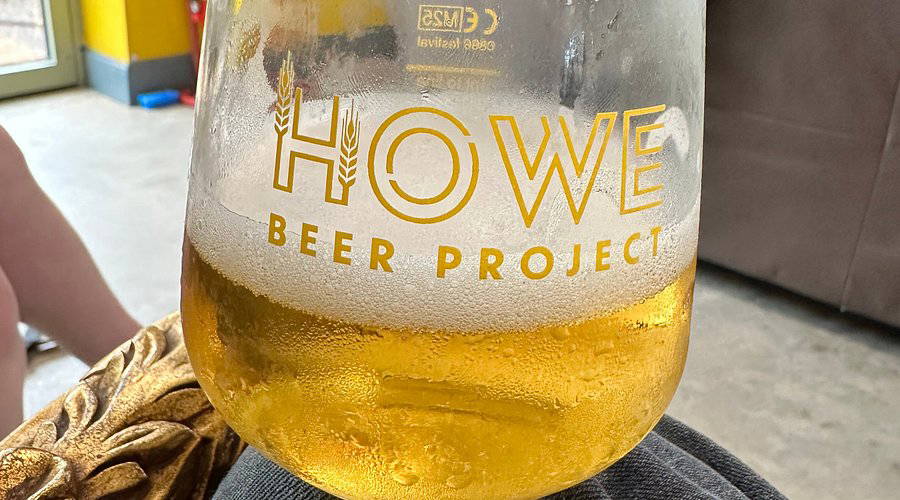
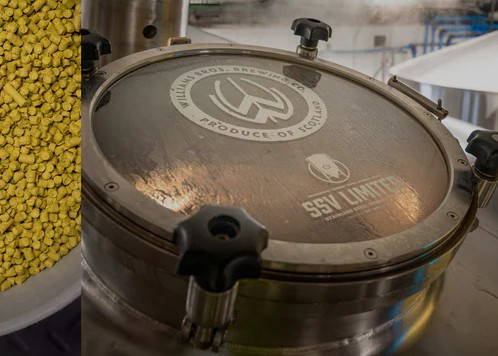
While acknowledging the difficulties outlined there are still Scottish brewers who are commercially successful. Shortly after being awarded Brewery Business of the Year and Best Independent Taproom at SIBA’s recent annual BeerX conference in Liverpool Jamie Delap of Fyne Ales commented “It’s not just about retrenchment and looking after the core customers. There are still plenty of opportunities for actually getting out into new venues and continuing to get this fight for fair access for decent beers”. At the same conference other Scottish brewers also received national awards indicating that they must be doing something right – Howe Beer Project took the SIBA award for Best New Independent Brewery, Dunblane’s Sheep in Wolf’s Clothing won employer of the year and Fiona MacEachern form Loch Lomond Brewery picked up the Brewer’s Brewer of the Year.
Other companies have been exploring other ways of raising revenue. Dundee’s 71 Brewing has diversified after purchasing craft soft drinks business Bon Accord in August 2025 which allows it to enter new sales channels and extract value from consolidating production and storage onto one site. Similarly, Williams Brothers of Alloa purchased soft drinks business Paisley Drinks Company in 2023 thus providing an opportunity to expand its sales channels whilst maintaining the core brands and recipes in Scotland.
Whatever happens to the craft market in Scotland one thing is certain is that breweries will continue to have to be creative, innovative and be willing to leverage their ability to be more agile in the market place than their behemoth brewing brothers.
Fergus Clark
3. Visit to 71 Brewing
On a sunny Saturday morning, 8 of us met at Market Street in Edinburgh to board the luxurious minibus for the hour and a half journey to Dundee to visit Seventy One Brewing.
We were then joined by 3 other members of the SBAA to have an excellent visit to the building, which is owned and run by Canvas, with 71 being a tenant. The building was part of a former foundry, which has had many uses over the last 120 years. You can learn more by visiting Seventy-One Brewing’s and Canvas Dundee’s respective websites.
We started off having a few drinks and food (from a very good street food vendor selling various Ramen dishes) at the Taproom. We were entertained by the DJ associated with the Blackness Block Party, that were starting their set. However, I think the daytime dance music may not be to our members tastes, and none of our members were dancing! A mention to the bar staff and food vendor who were very friendly and helpful, which continued throughout our visit to Seventy-One and Canvas.
We were then met by Alasdair who was our brewery and beer guide for the afternoon, He gave an excellent history of the building from its start as Blackness Ironworks, where the local name of “Hells Half Acre” came from and the future plans for the building to include spaces for local artists, the progress of the local furniture maker who uses spent grains, to the history of the tiles and wall panels around the building.
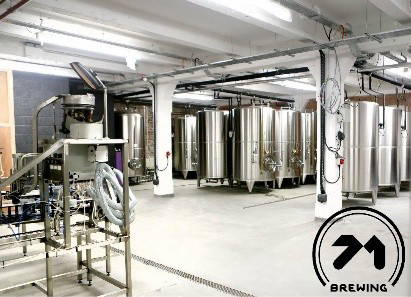
Alasdair then took us through the brewery from raw materials intake through to the brewing area with the Slovakian-built kit and the new can line, and how it has saved time and created additional revenue via contract brewing and packing opportunities. He also explained the dedication to reducing carbon emissions and the ability to capture carbon dioxide from the brewing process to reuse for carbonation.
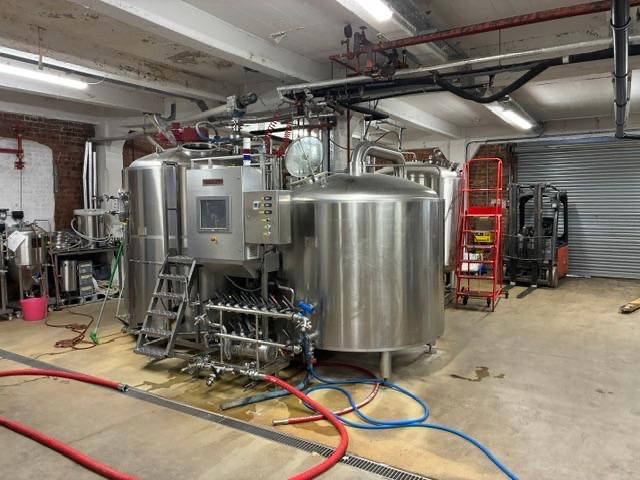
Brewing Kit
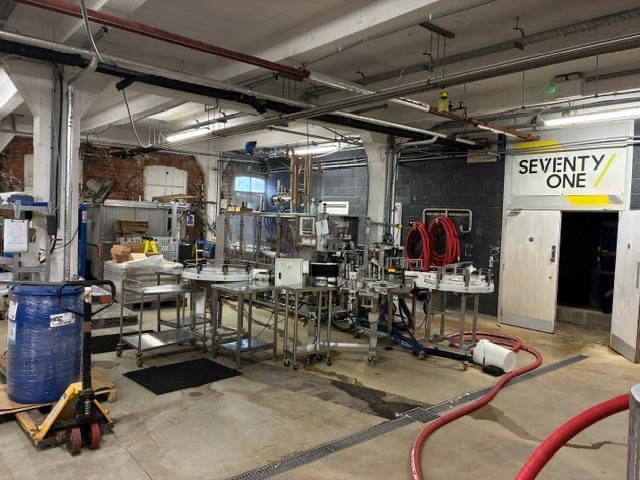
Can line
The questions were many, varied, and some very technical, which, given the profile and knowledge of our members, was not unexpected. Alasdair handled all the questions with confidence and truly showed his knowledge and enjoyment of our tour, as there were a lot of questions he had never faced before.
We then moved on to the tasting of the beers: Haze Halo (a hazy IPA), Cloud Fall (a pale ale), Strawberry Bank Lane (a seasonal sour), and Blackness (a stout). All the beers were enjoyed, and yet again, the enthusiasm and stories behind the liquids came through from Alasdair. Once finished, we had words of thanks for our Chairman for the Seventy One and Canvas team.
It was then back on the minibus (driven by the very good and friendly Ben) to make the return to Edinburgh as we said goodbye to Dundee. For those of you who couldn’t make it, I would certainly say that it is a worthwhile tour, and if you can’t make it to Dundee, then their beers are widely available in major supermarkets. Graham Malkiewicz
This is a link to Ben Palmer, our minibus driver, and the McLay’s of Armadale minibus company, who we recommend.
4. No Scotland, No Party
Stewart Brewing did produce a series of canned beers to celebrate Scotland reaching the World Cup finals for the first time in 28 years. They named each can after a song or phrase you would associate with the Scotland football team, as follows,
- We’ll be Coming
- Doe a Deer
- Oh, Yes Sir I can Brewgie
- It Cannae be, it is!
- Velocity
- No Scotland, No Party
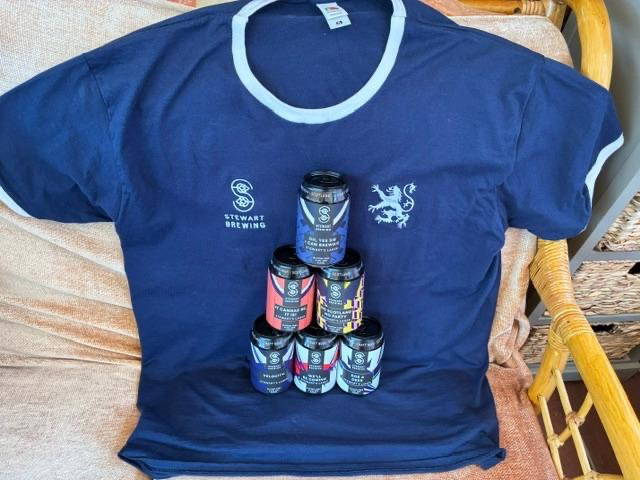
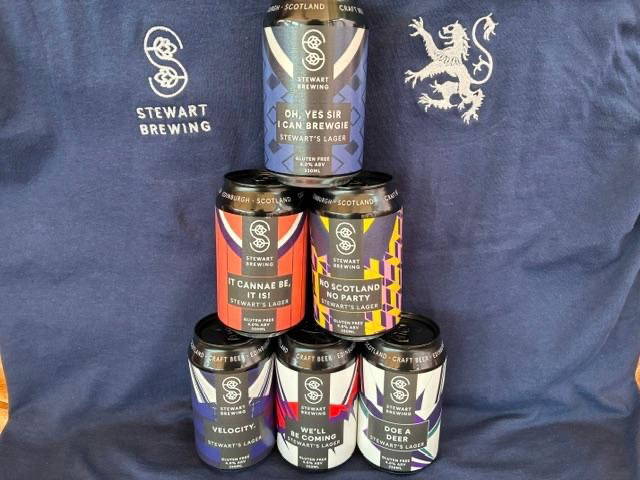
Pity that Scotland did not progress to the next round. However, the beers helped to make me forget.
John Martin
5. Broughton Brewery
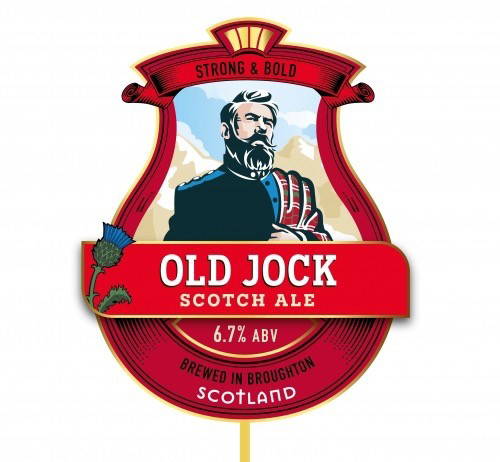
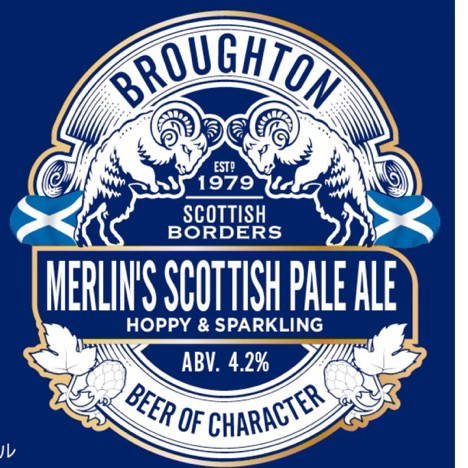
Last month, we learned of the sad news that brewing at Broughton Brewery was no longer sustainable. The brewery was founded in 1979 by David Younger and Peter Collins and was one of the earliest microbreweries in Scotland. Over the years, the brewery has received many awards for its beers, Old Jock, Wee Jock, Hopo, Merlin, and other brews. In 2024, Old Jock celebrated its 40th birthday and to mark this occasion an article was included in the SBAA Journal of that year. The good news is their award-winning beers will still be available, although now brewed at Spey Valley.
The following statement was received from David McGowan, Managing Director of Broughton Brewery.
“We regret to announce that we will close our brewing site at Broughton and switch production of our award-winning beers to our site at Spey Valley. This has been an extremely difficult decision for everyone involved, and we understand the disappointment this news may cause among our community of customers, partners, and supporters.
As you will be aware, this is an extremely challenging period for UK breweries.
While our beers like Old Jock are becoming increasingly popular, recent breakdowns have made continued production unsustainable. Despite extensive discussions around grants, loans, and other support mechanisms, we have not secured the funding required to replace or modernise the facility. Without that investment, we cannot continue brewing at Broughton
We have already started moving production to our partners at Spey Valley. There, we conducted detailed research and taste-matching to ensure our award-winning beers retain the flavour, character, and quality you expect from us. Our beers will continue to be widely available, and we remain committed to delivering the same standards that have earned your loyalty over the years.
We also want to acknowledge the impact this decision has on our staff. Our team is small, dedicated, and deeply connected to the brewery’s heritage. This transition is incredibly hard for them, and we ask for your understanding and consideration as we support our colleagues through this challenging period.
Finally, thank you for your support, and we hope you continue to enjoy our award-winning beers.”
6. Maclachlan’s ‘Edinburgh Ale’ carry-out jar
An interesting item relating to Scottish brewing history recently came up at BBR Auctions − a stoneware container, with a metal loop carrying-handle, bearing a transfer print which read “Maclachlan’s Edinburgh Ales”, accompanied by the firm’s trade mark (Figure 1).
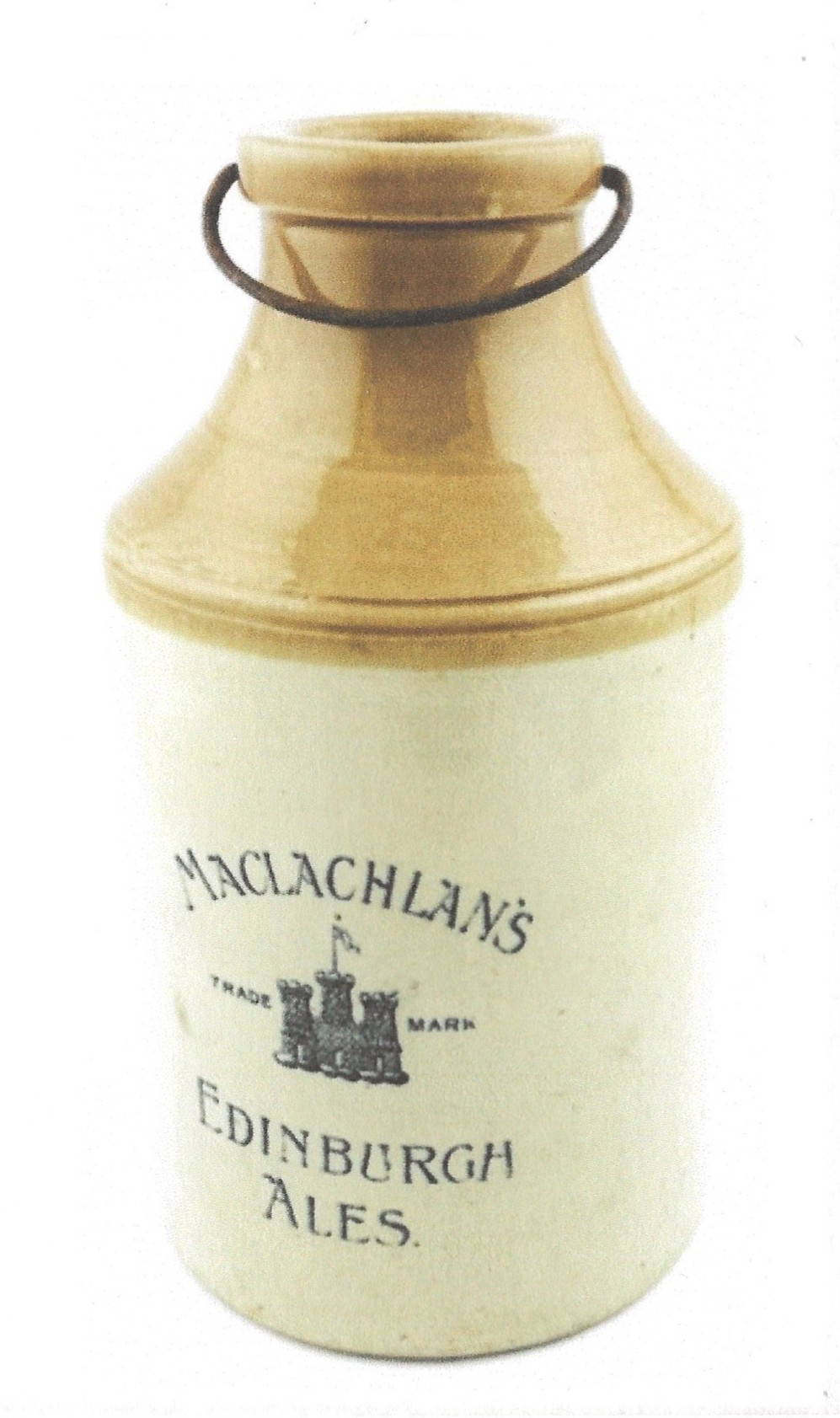
This brewery was founded by G. & J. Maclachlan in Maryhill, Glasgow, in 1889, being known as the Castle Brewery. (Why that name is something of a poser, because Maryhill never had a castle). It expanded to Edinburgh in 1901, and although the Glasgow venture closed in 1907, they continued in Edinburgh until 1966.
The two men, who were brothers, in charge are listed separately in the Glasgow Post Office Directory of 1889, thus:
George Maclachlan, wholesale wine, spirit, and malt liquor merchant, based at 17 West Nile Street, with office and stores at 145−147 Argyle Street.
John Maclachlan, brewer, wholesale and retail wine and spirit merchant, military contractor, and cigar importer, based at 39 Renfield Street and 256 West George Street, with offices and stores at 135 and 256 West George Street.
The Directory for the following year showed that the two had merged their business interests to form G. & J. Maclachlan, Castle Brewery, Wyndford Street, Maryhill, brewers, with their town office at 25 St Enoch Square, where they were also wholesale wine and spirit merchants and exporters. By 1909, they had become a Limited company: G. & J. Maclachlan Ltd., Castle Brewery, Maryhill, brewers and maltsters, they continued to operate as wholesale wine and spirit merchants and exporters, adding aerated water manufacturers and bottlers, and distillers at the Auchentoshan Distillery, Duntocher.
That marked the end of brewing at the Castle Brewery in Maryhill, although the Maclachlans continued to be wine and whisky merchants and exporters, and distillers at Auchentoshan. However, their brewing interest lived on, having shifted to Edinburgh in 1901: J. & G. Maclachlan (note the reversal of their positions, with the main brewer now in the lead), brewers and maltsters, Maclachlan’s Castle Brewery, Duddingston. (The name of the works can lead the unwary into thinking that it refers to Craigmillar Castle, lying less than a mile away, but it is clear that it is a carry-over from the firm’s days in Glasgow.) It was well equipped, having both a telephone and a telegraph. The brewery was acquired J & R Tennent in 1960 and closed six years later. The Maclachlans also continued to be wine and whisky brokers, at 8 North Bridge. They only stopped brewing at Duddingston in 1966.
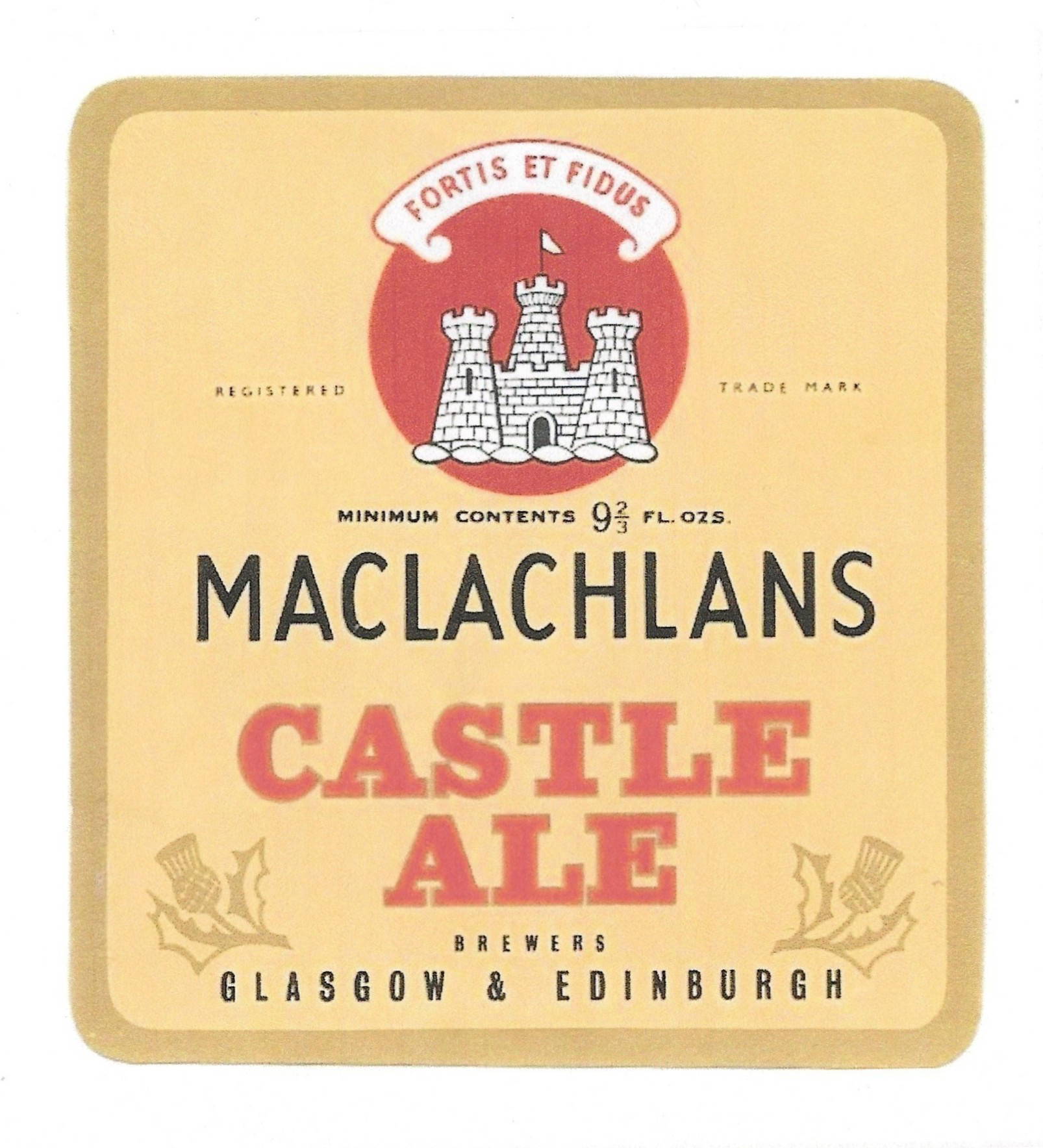
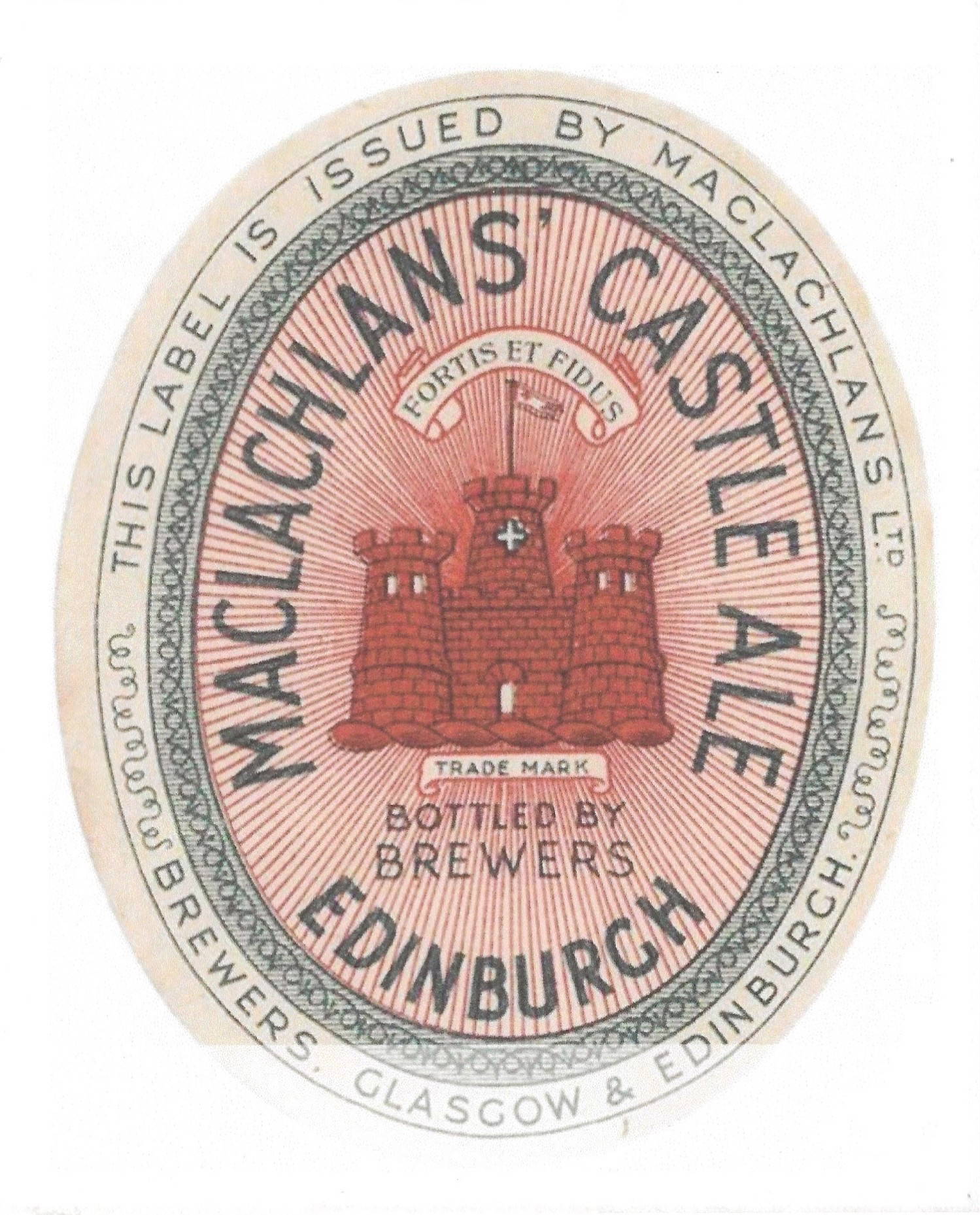
The jar bears the impressed maker’s mark of one of the major stoneware producers in Glasgow: Henry Kennedy of the Barrowfield Pottery. Henry, together with his sons John and Joseph, ran the Pottery for a total of 63 years (1866−1929). The date of the trade mark can be used to narrow down the date of production very considerably; it was Registered in 1925 (Figure 2), which means that the carry-out jar was made between 1925 and 1929, sometime within the five-year period covered by these dates, producing a likely date of 1927, ±2.
The stoneware jar is 10¾ inches tall, giving it a capacity of about six pints − a fair measure for a carry-out. One is tempted to wonder how many return trips to the local pub this jar made in its active life-time.
Graeme Cruickshank
The illustrations of the bottle label and beer mat are courtesy of Scottish Brewing Heritage.
Footnote : Another interesting fact is that Cooper & McLeod, who operated another named Castle Brewery in Edinburgh’s Grassmarket, which was named after nearby Edinburgh Castle, took G & J Maclachlan to a Court of Session over their use of the name ‘Castle Brewery’. However, Cooper & McLeod lost the action, and MacLachlans was awarded expenses.
7. Peat flavouring malt research
The SBAA is grateful to Gillian Paterson for providing a copy of a thesis titled, Development of a method for the Gas Chromatographic analysis of phenols in peated malt and whisky spirit. The thesis was prepared by Gillian’s uncle, Alexander Taylor, who worked for Moray Firth Maltings, as the Chief Chemist, Technical Manager, and then Research Manager in the 1970s and early 80s.
Alexander was presented with his Master of Science degree at the University of Dundee in 1983.
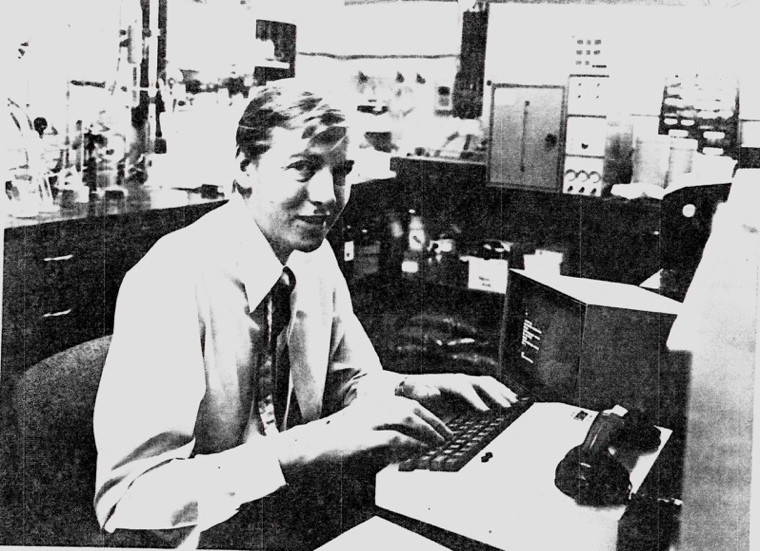
Alexander ‘Sandy’ Taylor
During his time working for Moray Firth Maltings, Alexander made valuable contributions to the working efficiency of the maltings. The following are just a few examples.
a) Developed the use of near-infrared analysis techniques for the analysis of barley.
b) Carried out an energy audit resulting in electricity cost savings of 50%.
c) Formulating and carrying through new concepts relating to the malting industry.
Purpose. (as per thesis) This work arose from a need within the malting and distilling industry for a standard analytical method to measure quantitatively the concentration of peat smoke which had been absorbed onto malted barley during the drying cycle and thence form a basis for commercial transactions.
Following many trials and experimental analysis, a conclusion was reached.
Conclusion. (as per thesis)
Commercial peat smoke solutions appear to contain added chemicals, so that colourmetric analysis would measure a high total phenol level. Use of peat smoke solutions should therefore be considered as undesirable until it can be proved that such solutions can be produced which will simulate to a much finer degree the flavours obtained by the genuine peating of malt.
The thesis does include the results of all the analyses carried out and displayed in graph format.
Moray Firth Maltings was a prominent Scottish malting company founded in 1967 in the Scottish Highlands. The Inverness site was built in 1968, followed by sites in Arbroath in 1972 and Grantham in 1989. In 1985, Moray Firth Maltings was acquired by Scottish & Newcastle for £23m. In 1999, Moray Firth Maltings merged with Hugh Baird & Sons, uniting five UK malting locations.
Alexander ‘Sandy’ Taylor was born in Broughty Ferry in March 1947. His father was a clerk with the British Linen Bank, and while he inherited a talent for figures, his academic and professional life would lead him to study chemistry. For many years, he worked with Moray Firth Maltings in Arbroath, innovating to create new ways of improving distillation processes. Outside of work, he was a talented photographer, a steam railway enthusiast, and an extremely skilled Bridge player. His life was blighted by illness, and he spent many years on kidney dialysis before receiving an organ transplant in 1984.
Sandy Taylor died in 1985, at the age of only 38. John Martin & Gillian Paterson
8. Last Runnings
 SBAA EVENT – Archive at Glasgow University.
The SBAA has arranged to visit the archive at the University of Glasgow on Tuesday 8th September. This will give you the opportunity to view a selected range of artefacts, with many that have interesting stories to tell.
If you wish to attend, please get in touch by no later than the 14th August. There is a limit of 15 people with access to the archive by staircase only. No doubt a follow up pint in one of the many good bars in Glasgow’s West End will finish of the visit.
Further details will be issued to those who wish to attend.
If you would like to attend, please inform the Secretary, secretary@scottishbrewingarchive.co.uk
Welcome new member
Warm welcome to Richard Barnes former Scottish and Newcastle employee who also spent some time at the Inveralmond Brewery.
SBAA Annual Fees
Your next newsletter will be October; however annual fees will be due at the end of September for most members. Please wait until you get an automated email from our system early September and follow the instructions to make a quick and safe payment. This is our official method for renewal. If you had a standing order or direct debit please cancel.
As a member you will qualify to receive our Annual Journal packed with interesting articles and photos. You will also get an invite to AGM, usually held in November, which proves to be a good social event with a guest speaker.
Thanking you in advance for supporting Scottish Brewing history.
Correspondence to the SBAA Secretary secretary@scottishbrewingarchive.co.uk
SBAA Newsletter No. 68 – July 2026